


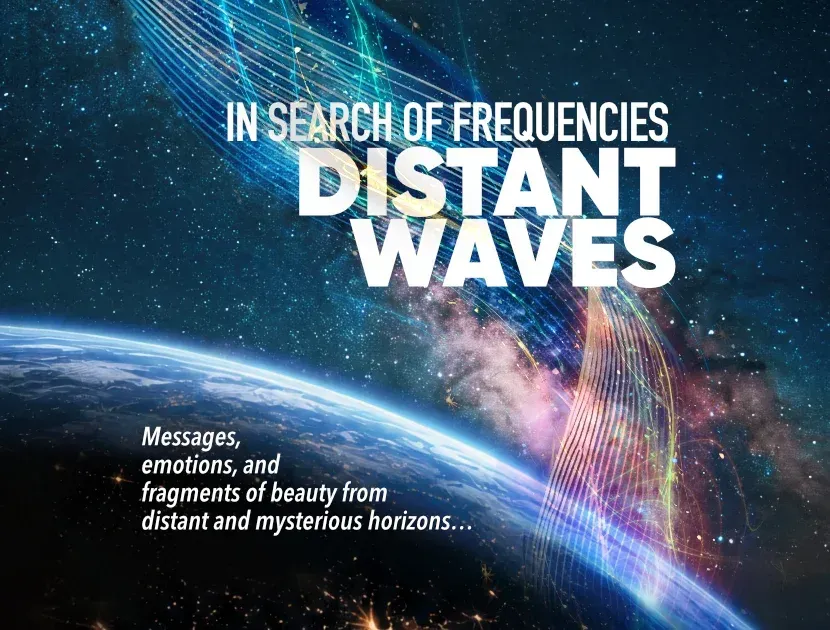
Sunday, November 15, 2026 - 3:00 PM
CHURCH OF SAINT PETER THE APOSTLE
1201, Rue de la Visitation
Montreal
A WORD FROM THE ARTISTIC DIRECTOR
It is with great joy and enthusiasm that I welcome you to the first Musica Orbium concert under my artistic direction.
This year, we invite you to join us In Search of Frequencies.
Music is, above all, vibration — an energy that travels through space and time. Composers tune in to the mysterious frequencies of inspiration, emotions, and the sounds that surround them, giving them musical form. Performers bring these vibrations back to life, sometimes centuries later, and pass them on to those who listen. Today, it is your turn to tune in.
With Distant Waves, we turn our gaze toward what seems beyond our reach: the stars, whose light sometimes travels for thousands of years before reaching us; memories, which continue to resonate long after the events that gave rise to them; and loved ones who are far away, or no longer with us, yet whose presence we still feel.
Through the works in this programme, we will explore these different forms of distance. Some evoke the vastness of the cosmos, others the stillness of the night, the passage of time, or the pain of absence. All remind us that what is far away is not necessarily lost.
Perhaps this is one of music's greatest gifts: its ability to bridge the distances between us, bring the past back to life, and connect us, for the duration of a concert, to something greater than ourselves.
I would like to extend my heartfelt thanks to the singers of Musica Orbium for their dedication, sensitivity, and the trust they have placed in me as we embark on this new artistic journey. My thanks also go to our wonderful guest musicians, as well as to everyone who contributes, in big or small ways, to bringing this ensemble to life.
And above all, thank you for being here, for lending an ear, and for sharing with us these vibrations from so far away.
Enjoy the concert!
François Lukawecki
Artistic Director
Musica Orbium
PROGRAM
FREQUENCIES FROM THE INFINITE
Seek Him That Maketh the 7 Stars
Owen Spicer, organ
Jonathan Dove (1959–)
Only in Sleep
Lauren Carter, soprano
Erik Ešenvalds (1977–)
Across the Vast, Eternal Sky
Ola Gjeilo (1978–)
Distant Stars
Sfogava con le stelle (He Confided in the Stars)
Claudio Monteverdi (1567-1643)
Underneath the Stars
Lison Brouard, harp
Kate Rusby (1973–)
Arr. by J. Clements
Choose Something Like A Star
Randall Thompson (1899-1984)
NOCTURNAL WAVES
Epitaph for Moonlight
R. Murray Schafer (1933–2021)
Abendlied (Evening Song)
Josef Gabriel Rheinberger (1839–1901)
Sure on this Shining Night
Morten Lauridsen (1943–)
Beyond
Mantra
François Lukawecki (living)
Le ballet des fantômes (The Ballet of Ghosts)
Louis Desjarlais (living)
Les berceaux (The Cradles)
Dominique Pelletier, theremine
Gabriel Fauré (1845–1924)
Arr. F. Lukawecki
THE ETERNAL
For Unto Us a Child is Born
George Frideric Handel (1685–1759)
Lux Aeterna (Eternal Light)
from
Requiem
Bancroft Elite Singers Choir
Lauren Carter, soprano
Owen Spicer, orgue
Lison Brouard, harpe
John Rutter (1945–)
PROGRAM NOTES
WAVES THAT TRAVEL, SURROUND US, AND STIR US DEEPLY
What would our experience on Earth be like if we could not perceive the waves that surround us? Without light or sound, our perception of the world would be radically different. Since the dawn of humanity, we have gazed at the sky, scanned the horizon, and listened intently into the darkness, seeking to understand the signals that reach us.
Music is a form of vibrational energy that travels through space and time. Many composers have described inspiration as something that comes to them mysteriously, as though their musical ideas originated from a distant, elusive source. Some have even felt that they were not so much creating their works as capturing them and transcribing them onto the musical staff.
Composers have developed ways to capture these ideas, emotions, and frequencies, encoding them on paper. Performers then take on the task of deciphering these symbols and bringing the vibrations back to life through their instruments and voices, sometimes centuries later. What a fascinating mystery this transmission represents, from the depths of the imagination to the ears and hearts of the audience!
With Ondes lointaines (Distant Waves), Musica Orbium invites you to capture these vibrations from afar, on a journey that will take us from the vastness of the cosmos to the depths of human memory, and ultimately to the mysteries of eternity.
FREQUENCIES FROM THE INFINITE
Our journey begins in the immensity of the universe, where distances seem infinite and the boundaries between time, space, and imagination begin to blur.
In Seek Him That Maketh the Seven Stars, Jonathan Dove makes the stars shimmer through the organ's repeating figures and soaring choral lines, creating a luminous celebration of creation. In the Book of Amos, the Hebrew verb darash (דָּרַשׁ), meaning "to seek," also conveys a sense of earnest, intentional pursuit. Although this verb appears elsewhere in the chapter rather than in the verse from which the work takes its title, it deepens our understanding of the invitation to seek the Creator: not simply to search, but to turn toward Him and strive to draw closer.
The atmosphere shifts with Ēriks Ešenvalds's Only in Sleep, where a delicate melody transports us into the boundless world of dreams and childhood memories, reuniting us with friends whom time seems to have left untouched. Dreams become a way of bridging the distances that separate us from those we hold dear.
Finally, in Ola Gjeilo's Across the Vast, Eternal Sky, the piano takes on a leading role, like a distant star calling the choir toward it, always keeping an eye on the seemingly endless horizon. With its enveloping harmonies and sweeping musical gestures, this work evokes the immensity of the sky, the eternal warmth of the sun, and the enduring power of love.
DISTANT STARS
Throughout history, the stars have been the confidants of our dreams, our loves, and our sorrows. Their light has guided explorers and helped ancient civilizations mark the changing seasons and anticipate certain natural phenomena. Distant and seemingly unchanging, they are both messengers of mystery and silent witnesses to our existence.
In Claudio Monteverdi's madrigal Sfogava con le stelle (He Confided in the Stars), a lover pours out his anguish to the stars through expressive musical writing in which the voices seem to sigh, plead, and burst into passion. In our interpretation, a dialogue unfolds between a vocal quintet and the full choir, recalling ancient Greek theatre, where the chorus comments on and amplifies the emotions of the characters.
With Underneath the Stars, Kate Rusby takes us into a more intimate world, where the simplicity of a folk melody evokes the tenderness and melancholy of lost love.
Finally, in Choose Something Like a Star, Randall Thompson invites us to contemplate the constancy of the stars, with music that gradually builds in intensity toward a powerful and radiant affirmation.
NOCTURNAL WAVES
As the sun disappears, the world is transformed. Night becomes a realm of mystery, contemplation, and serenity, where sounds and silences take on a new dimension.
With Epitaph for Moonlight, Canadian composer R. Murray Schafer immerses us in a mysterious soundscape, where voices whisper, intertwine, and explore unusual sounds to evoke moonlight. The text consists of invented words created by students whom Schafer had asked to imagine new synonyms for "moonlight."
Josef Rheinberger's motet Abendlied (Evening Song) draws its text from the Gospel of Luke, in which the disciples on the road to Emmaus encounter a stranger and invite him to stay with them as evening approaches, unaware that he is the risen Christ: "Stay with us, for evening is approaching and the day is nearly over." Its rich six-part harmonies express this plea in an atmosphere of tenderness and quiet reflection.
Finally, Morten Lauridsen's Sure on This Shining Night unfolds in long melodic lines and warm harmonies, like a peaceful meditation beneath a shimmering night sky.
BEYOND
Some distances cannot be measured in kilometres or light-years. They are the distances that separate us from those who have passed away, from fading memories, and from voices that now resonate only in our minds.
In Mantra, François Lukawecki explores repetition and the resonances of the human voice, creating a meditative atmosphere in which time seems suspended. The poem by Stéphane Mallarmé unfolds as a single long sentence evoking the soul's ascent toward the heavens, punctuated by poetic digressions. Like a meditation disturbed by intrusive thoughts, the music struggles to move forward, constantly diverted from its path.
With Le ballet des fantômes (The Ballet of Ghosts), Louis Desjarlais draws us into a mysterious world where the voices and piano seem to bring invisible presences to life.
Finally, Gabriel Fauré's Les berceaux (The Cradles), presented in a new arrangement for mixed choir, piano, and theremin, evokes the pain of separation. Set to a poem by Sully Prudhomme, the gently rocking accompaniment recalls both the cradles in which children sleep and the ships sailing away, carrying men toward the horizon.
THE ETERNAL
Having travelled through the distances of the universe, the night, and memory, our journey concludes with the idea of eternity. On one hand, there is the birth of a Messiah; on the other, eternal rest.
With For Unto Us a Child Is Born, from George Frideric Handel's Messiah, the voices intertwine in a whirlwind of jubilant vocal passages, celebrating the birth of Christ and the promise of a new world.
The concert concludes with Lux Aeterna (Eternal Light), the final movement of John Rutter's Requiem, where the sounds of the harp, piano, and voices of two choirs come together in a prayer for eternal peace. The music rises one final time toward that distant light, like a vibration that continues its journey long after the final note has faded.
THE ARTISTS
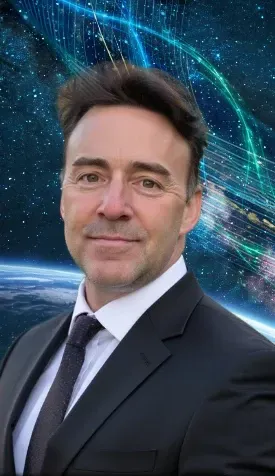
FRANÇOIS LUKAWECKI, Conductor and Artistic Director
François Lukawecki is a Montréal-based conductor, award-winning composer, and educator. He is artistic director of Les Voix de la Rivière, co-director of the McGill University Chorus, and founder of the Canadian Experimental Choir. He holds bachelor’s degrees in music and education, as well as master’s degrees in education and choral conducting. He is currently pursuing a doctorate in choral conducting at McGill University under the mentorship of Dr. Jean-Sébastien Vallée.
François’s compositions have received numerous national and international distinctions. These include the Alliance chorale du Québec’s 2025 Prix pour composition récente, Choral Canada’s Stephen Chatman Award, the Phoenix Chamber Choir Composition Competition prize, and the 2023 Université de Sherbrooke Choral Composition Competition prize. He also received a second prize in composition at the 2024 International World’s Best Musicians Competition (UK), Gold and Platinum prizes at Poland’s World Grand Prix of Music, and its Distinguished Creativity Special Award. Most recently, his composition Cosmic Fireflies received an honourable mention in Choral Canada’s competition for the Diane Loomer Prize. François is published by Cypress Music Canada.
François first encountered Musica Orbium as a chorister under the direction of Patrick Wedd. He is honoured to return to the ensemble as its artistic director. Known for his passionate conducting, meticulous attention to detail, and imaginative programming, François looks forward to leading Musica Orbium in performances that bring together choral masterpieces, seldom-heard gems, and compelling works by Canadian composers.
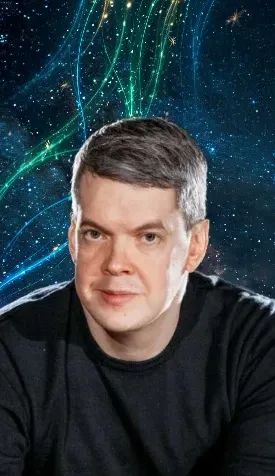
Maxim Shatalkin, pianist
Maxim Shatalkin holds a master's degree and a doctorate in performance arts from the Tchaikovsky Conservatory in Moscow. A laureate of the Rostropovich Foundation Prize (2004), the International Rachmaninov Competition in St. Petersburg (2012), and the Vienna International Piano Competition (2013), he also won the Grand Prize at the Bulgarian International Music Competition (2012) and has served on the juries of several competitions. For over ten years, he taught at the renowned Gnessin School of Music in Moscow. With Olga Kudriakova, he founded and directed the Ars Nova School of Arts in Moscow and organized a summer music academy for young musicians in Pokrovsk, Yakutia.
Based in Montreal since 2022, Maxim is an exclusive artist with the Trio Fibonacci. He has collaborated with McGill University's Schulich School of Music and currently teaches at Vanier College's School of Music and the CAMMAC Music Centre. He has also worked as a guest pianist at the Orford Musique Academy. Maxim has given masterclasses at several leading North American institutions, including the Colburn School in Los Angeles, the Bob Cole Conservatory in Long Beach, Indiana University, the University of Michigan, and Mount Royal University in Calgary, as well as, most recently, in China.
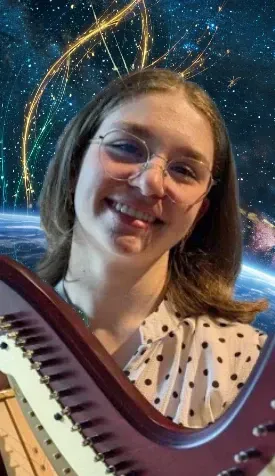
Lison Brouard, harpist
Lison Brouard began studying the harp at the age of nine with Cécile Delage. In 2024, she joined the Conservatoire de musique de Montréal, where she continues her studies with Valérie Milot. She has participated in masterclasses with Caroline Lizotte and Valérie Milot, in 2022 and 2023, respectively.
A three-time gold medalist at the Concours-Festival de musique de Sherbrooke, where she has participated four times, Lison has also received a gold medal at the Concours de la Capitale. Since 2022, she has taken part annually in Harp Day, continuing to develop her musicianship and deepen her connection with the harp.
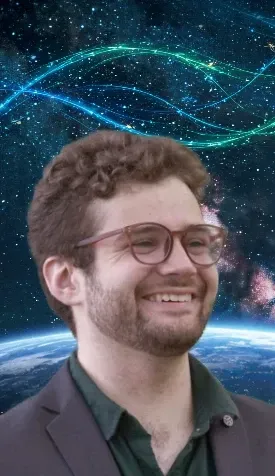
Owen Spicer, organist
Owen Spicer is an organist and accompanist based in Montreal, Quebec. An Associate of the Royal Canadian College of Organists, he has received numerous awards and scholarships, including the Godfrey Hewitt Scholarship, the Paul Westermeyer Hymn Playing Award,
and the Donald and Helen Mackey Memorial Award. In 2024, he was awarded First Prize in the Osbourne Organ Competition, presented by the Summer Institute of Church Music.
Owen has held positions as Assistant Organist at Christ Church Cathedral in Ottawa, Organist at Montreal West United Church, and Organ Scholar at Christ Church Cathedral in Montreal, First-St. Andrew’s United Church in London, Ontario, and St. Martin-in-the-Fields in London, Ontario.
As a recitalist, Owen has performed at numerous venues across Quebec and Ontario, including Redpath Hall in Montreal, St. Andrew’s Church in Ottawa, and St. James Cathedral in Toronto. He has also performed with a variety of instrumental and choral ensembles across Canada, including the Caelis Ensemble in Ottawa and the Stratford Symphony Orchestra.
Owen holds a Bachelor’s degree in Organ Performance from McGill University, where he studied organ with Hans-Ola Ericsson and Jonathan Oldengarm, and choral conducting with Jean-Sébastien Vallée. He is currently pursuing a master’s degree at McGill University, studying with Isabelle Demers.
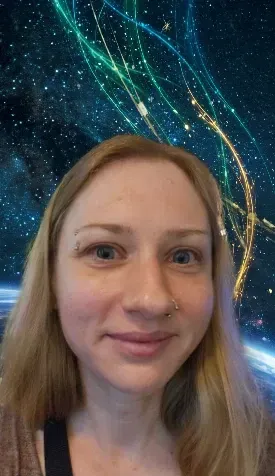
Dominique Pelletier, thereminist
Dominique Pelletier is a multidisciplinary artist, musician, researcher, sound designer, and educator based in Montreal, where she teaches translation at Concordia University. Moving between musical genres and sound experimentation, she combines the sounds of the theremin and retro video game consoles, such as the Nintendo Game Boy DMG, with synthesizers, modified electronic instruments, and organic sounds. Her music is a carefully crafted blend of improvised performance and programmed play.

Bancroft Elite Singers
The Bancroft Elite Singers are an advanced children's choir based at Bancroft Elementary School, part of the English Montreal School Board in Montreal. Under the direction of music teacher and artistic director François Lukawecki, the ensemble explores a rich and challenging repertoire, ranging from contemporary classical works to innovative choral compositions, including Miniwanka by Canadian composer R. Murray Schafer.
The choir has collaborated with several ensembles, including the Canadian Experimental Choir, Ensemble Vocal À ContreVoix, and the Sainte-Anne Singers. Its performances have earned recognition beyond the school community, notably through national distinctions in the CBC Music Class Challenge, highlighting the exceptional musical achievements of its young singers.
LE CHOEUR
Sopranos
Yevgeniya Zvereva Amis
Sharon Braverman
Lauren Carter *
Sophie Gervais
Robin Hornstein
Mariko Imanaka
Olga Konovalova
Maeve Manion-Fischer
Jinan Paquin
Louise Rousseau
Marta Rzepkowska
Ginette Simard
Maria Tacu
Lucie Vermette
Kelly Yuan
Altos
Michelle Alie
Vera Berenbaum
Michèle Donckerwolcke
Denise Goulet
Anne Grondines
Marie-Chantal Hudon
Karen Kobierski
Maureen Lafrenière
Louise Paiement
Claudine Tremblay
Maja Zbogar *
Tenors
Christian Barrette
Jean Choquette
Abigail Jacob
Jean-Frédérick Olivier *
Miles Wetzel *
Laurence Wilson
Bass
François Bertrand
Christopher Grocholski
Louis Langelier
Dion Lewis
Russell Proulx
Richard Saber *
Neal Sondheimer
* Associate Choir Members
ACKNOWLEDGEMENTS
A heartfelt thank-you to all the volunteers who have contributed, in ways both large and small, to the production of this concert.
We are equally grateful to all members of Musica Orbium for their ongoing commitment, hard work, and energy. Their dedication is essential and helps make each of our concerts a unique experience.
Special thanks to our associate pianist, Pierre McLean, for his invaluable contribution during rehearsals.
We extend our sincere thanks to Yevgeniya Zvereva Amis and Christian Barrette for researching and translating the texts of the works in our program, to Anastasia Popov for projecting the lyrics during the concert, helping our audience connect more deeply with the music.
Our deepest gratitude goes to Brad Longworth for his generosity and invaluable support, which directly contribute to our fundraising efforts and the realization of our activities.
The telescopes on stage have been generously loaned to us by Plateau Astro, a Montréal-based initiative offering astronomy workshops, presentations, and mobile planetarium shows. A heartfelt thank-you to its founder, Trevor Kjorlien! On clear days, you can often spot him on a street corner in the Plateau, inviting passersby to take a peek through his telescope.
Finally, a warm thank-you to our graphic designer, Artiom Kusci, whose creativity has shaped the visual identity of this concert and beautifully captured its spirit.
DONORS
Maestro
Fondation Sibylla Hesse
Virtuoso
Marlene et Murray Dalfen
Maestoso
Bernard Cayouette
Gilles Renaud
Marcato
Anonyme
Christine Bergeron-Walsh
Nancy Gosnell
Margery Knewstubb
Uli Locher
Jason Mohammed
Danielle Rosset Stephenson
Dolce
Karen Alexander
Anonyme
Nilia Berkin
Nadia Bini
Sylvie Bouffard et Richard Nesbitt
Louise Cinq-Mars
James Cline
Maria Ines De Lorenzo
Alexandra Di Paolo
Javier Espinoza
Lyne Lanthier
Yves Lanthier
Lisa Lorenzino
Blandine Mapondjou
Ehsan Rezabeigi
Carina Rose
Ricardo Urbina
Emily Wall
Mark Wallis
Amabile
Carole Arseneault
Candy Flores Cardenas
Marie Courbet
Mélanie Crippa
Nicole Fortin
Estelle Janelle
Jun Liu
Dominique Salameh
Rene Sanchez
Anonymes
DONATION IN CULTURE
It is thanks to the generosity of our community that Musica Orbium can, year after year, bring to life unique choral music concerts featuring often original or rarely heard works, and share them with an ever-growing audience.
By supporting Musica Orbium, you are directly contributing to showcasing local artists — seasoned professionals as well as promising young talents — and bringing vibrant, demanding and deeply moving performances to the stage.
Every donation helps keep music alive. Click below to discover all the ways tocontribute to this exciting challenge with us.
SING WITH US!
Become a backing vocalist for Musica Orbium and IJoin us for our next musical adventure.
Click below to learn more:
BOARD OF DIRECTORS
Olga Konovalova, president
Christian Barrette, vice-president
André Manseau, treasurer
François Bertrand, secretary
Vera Berenbaum, administrator
Michelle Alie, administrator
We thank the outgoing board members for their commitment and continued support in organizing this event.

